



Nutrition, Boundaries & Community Care
Feeding stray and feral cats can be an act of compassion that prevents suffering, stabilizes colonies, and builds trust with communities. Done poorly, the same intention can attract pests, fuel neighbor conflict, spread disease, and even put cats at risk of removal. Responsible feeding isn’t simply “putting food out.” It’s a structured welfare program that integrates nutrition, hygiene, boundaries, and Trap-Neuter-Return (TNR). This guide sets out a practical, expert framework for feeding community cats in ways that improve feline health, reduce nuisance, and earn public support.
Quick note: Laws vary by country and municipality. Some areas regulate or restrict feeding, require permits for colony caretakers, or specify vaccination standards. Treat the guidance below as best practice, and always confirm local requirements before you begin.
Define The Goal: Stabilize, Don’t Expand
Feeding has a single ethical objective: improve welfare while preventing new litters. That means your feeding plan should be inseparable from a TNR plan. Sterilized, vaccinated, ear-tipped cats remain as “territory holders,” discouraging unsterilized newcomers and keeping population flat or declining. Without TNR, feeding alone creates a magnet effect; with TNR, feeding becomes the backbone of predictable, non-breeding colony care.
A secondary goal is to reduce friction. Well-run feeding stations are quiet, clean, and brief. They respect neighbors, wildlife, and city services. They also make cats easier to monitor, trap, and treat when needed.
Nutrition Fundamentals For Outdoor Cats
Community cats have the same biological needs as pet cats—they’re obligate carnivores that require taurine, high-quality protein, and essential fatty acids. What differs is the environment and energy cost of staying warm, avoiding threats, and sometimes traveling further for resources.
What to feed: Use a complete, balanced commercial diet (wet, dry, or a blend) that meets AAFCO/FEDIAF standards. Avoid table scraps and bones: cooked bones splinter; fatty leftovers cause pancreatitis; onions, garlic, and certain artificial sweeteners are toxic. If you must choose only one format, many caregivers favor wet food for hydration and palatability, then backstop with measured dry for cats that arrive late.
How much: As a baseline, adult colony cats typically maintain on ~180–220 kcal/day depending on size, body condition, season, and sterilization status. Queens with kittens require more; growing kittens need calorie-dense food split into multiple feeds. In cold climates, increase portions modestly in winter to offset energy spent on thermoregulation; in hot climates, prioritize moisture and shade.
Hydration: Outdoor cats are chronically under-hydrated, especially where natural water is scarce or contaminated. Provide wide, shallow bowls (cats prefer to avoid whisker stress) and refresh daily. In freezing conditions, use insulated bowls or rotate warm water; in summer, shade bowls and consider a second water site away from food to attract cautious drinkers.
Schedule and Station Design That Prevent Problems
Predictability is the difference between stewardship and scatter-feeding. Feed at the same times daily (ideally twice a day) and for short windows—10–30 minutes—then remove bowls and leftovers. Timed feeding reduces wildlife visits, pest load, and neighbor complaints about mess or midnight cat gatherings.
Choose a discreet location with natural cover and at least two escape routes, set back from driveways, footpaths, and playgrounds. Elevate the feeding surface to deter ants and rodents; a simple pallet topped with a washable plastic board works well. In rainy regions, add a small roof or plastic tote “bay” to keep food dry. Bowls should be stainless steel or glazed ceramic—durable, non-porous, and easy to sanitize.
Spacing prevents fights. Offer multiple small feeding points a few meters apart so timid cats can eat without confrontation. A good rule is one bowl per two expected cats, spread out; it’s more effective than one large trough that a dominant cat can guard.

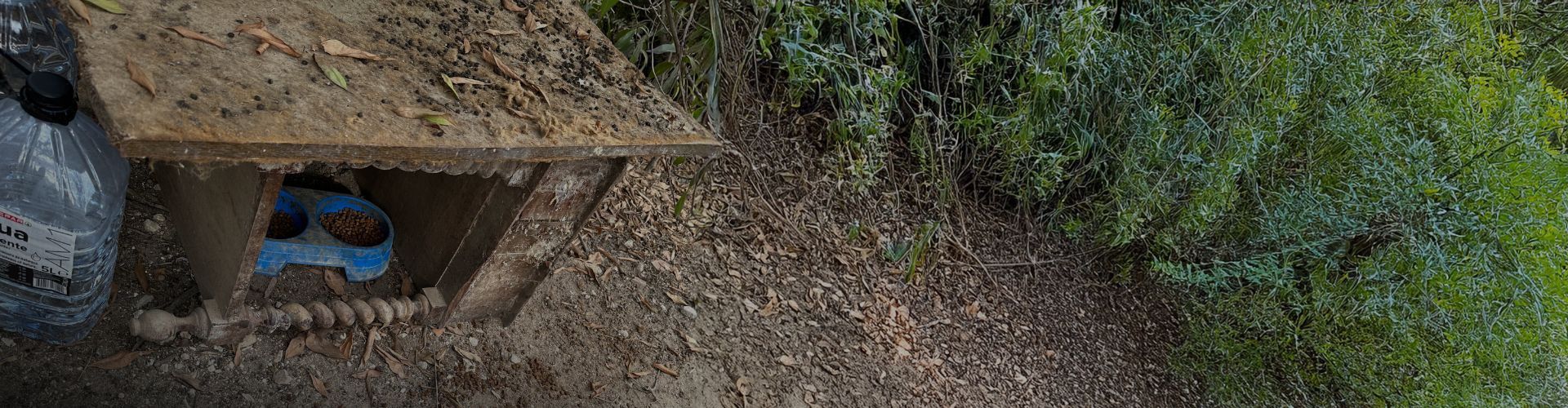
Safe feeding spot for local stray cats in Sagres, Portugal

Water and food checks during feeding rounds, Dubai
Hygiene is Policy, Not Preference
Cleanliness protects cats and your reputation. Rinse bowls after each feeding with hot water and mild, unscented detergent; once or twice weekly, disinfect with a dilute bleach solution (follow product instructions) or veterinary disinfectant, then rinse thoroughly. Transport bowls in a sealed tote to avoid drips and odors. Brush or sweep the area after each session and remove all litter, packaging, and food remnants. If your station uses a mat, select a rubber one you can hose down.
Water bowls deserve the same rigor. Biofilm grows quickly outdoors; scrub and rotate extra bowls so one set can dry in the sun (UV helps). A tidy station signals to neighbors and city staff that the colony is responsibly managed.
Boundaries: Neighbors, Wildlife, Property
Responsible feeding includes social design. Before you start, meet nearby residents and businesses. Explain the plan: scheduled feedings, clean-up, TNR, and numbers you’ll be tracking. Invite concerns upfront and offer your contact details for a rapid response. If your area uses community notice boards or WhatsApp groups, post a brief “Colony Care Plan” outlining hours and cleanliness commitments.
Wildlife protection is non-negotiable. Remove food promptly, avoid dawn/dusk feedings in areas with active predators or scavengers, and keep stations away from sensitive habitats. Where birds or small mammals are at risk, position stations near cover so cats approach the site rather than sit hunting in open perches. If predation remains a concern, consider moving the station, adjusting the schedule, or working with local conservation groups to identify safer placements.
Private property and public facilities deserve respect. Never feed on school grounds, children’s play areas, building entrances, or manicured communal gardens without permission. A small relocation early prevents big conflict later.
Integrate TNR: The Operational Loop
Feeding is your trap calendar. Consistent mealtimes teach cats to assemble predictably, which makes humane trapping efficient and less stressful. Keep a simple log (paper or spreadsheet): date, cats seen, ear-tip status, newcomers, injuries, and any behavior changes. Note females with distended abdomens (possible pregnancy) and lactation signs. These details help you prioritize trapping order and veterinary bookings.
Coordinate with a vet or low-cost clinic for sterilization, vaccination (especially rabies where endemic), parasite control, and ear-tipping. After surgery, return cats to the same site once recovered unless a medical hold is indicated. For adoptable kittens or unusually social adults, plan foster or placement separately—your core colony remains outdoor, stable, and non-breeding.
Kittens, Seniors, and Special Cases
Kittens under eight weeks are best moved with a queen only if absolutely necessary and if a foster resource is secured; otherwise, feed queens generously and trap once kittens are weaned and eating independently. For weaned kittens, offer frequent, calorie-dense meals and fast-track TNR/adoption before fear hardens into feral behavior.
Seniors and frail cats may struggle at group stations. Create a quiet secondary point for them with softer food and minimal competition. Watch for dental pain (dropping food, head tilting, pawing at mouth) and for weight loss masked by a thick coat. For medically complex cases, work with a vet on what’s feasible outdoors—sometimes pain control and parasite management alone make life significantly better.
Food Safety and Storage Outdoors
Heat, insects, and opportunistic animals turn good intentions into hazards fast. Only bring what you’ll serve; keep extra sealed in pest-proof containers and out of the sun. In hot weather, split smaller wet food portions more frequently rather than leaving one large tray to spoil. In cold weather, use insulated carriers to keep wet food palatable and rotate warm water to reduce ice.
Dispose of cans and pouches responsibly; don’t use colony bins that attract attention. A small lidded caddy you empty at home maintains the site and your privacy.
Public Health, Parasites, and Risk Reduction
Routine deworming and flea control, administered during TNR or scheduled health days, reduces suffering and visibly improves coat condition, which in turn helps neighbors recognize that the cats are cared for—not neglected. Simple practices—hand hygiene after feeding, glove use during clean-up, and keeping feeding away from children’s areas—reduce zoonotic risk substantially.
Vaccination at surgery is the cornerstone of rabies prevention where relevant. If your region doesn’t include vaccination in TNR, seek sponsors to add it; even partial coverage reduces community risk and eases municipal concerns.
Data, Accountability, and Storytelling
Numbers and narratives win support. Track sterilization rates (aim for 70%+ of the known colony), kitten counts, and nuisance complaints before/after you formalize feeding. Capture simple “before/after” photos of cats whose coats improved after parasite control. Share periodic updates with nearby residents and local officials: “We’re at 82% sterilized; no kittens this spring; feeding daily 7:00–7:20, all bowls removed.” Transparency converts skeptics.
When colonies shrink, celebrate responsibly. Credit community partners—a nearby shop that allows storage, the clinic that offered a discount, the volunteer who tracks records. Feeding programs that acknowledge shared effort tend to be tolerated—and copied.
Funding and Logistics That Last
A sustainable feeding program doesn’t rely on one person’s wallet or energy. Draft a micro-budget: monthly food cost, consumables (gloves, detergent, liners), transport, and a veterinary buffer for emergencies. Diversify support: pair small recurring donations with occasional drives for surgery funds. Set volunteer roles—feeder, cleaner, trapper, data keeper, neighbor liaison—and rotate duties so the program survives holidays and burnout.
Create a minimal SOP (Standard Operating Procedure): where food is stored, exact feeding windows, cleaning checklist, who to call for injuries, and how to record a newcomer. When someone covers your shift, the colony shouldn’t notice the difference.
Conflict Management: When Problems Arise
Even the best systems face pushback. If a neighbor reports noise or mess, respond quickly and non-defensively. Adjust the schedule so feeding occurs when they’re not present; add extra clean-up passes; reduce portions to what is consumed on-site. Offer to show the TNR data and explain how sterile, territorial cats prevent population surges. If vandalism or poisoning threats occur, document everything, move stations out of sight, and escalate through proper channels.
With businesses, practical solutions help: no feeding during trading hours, zero bowls visible after sessions, and pest deterrents unrelated to the cats (sealed dumpsters, reduced spillage). Many conflicts melt once evidence of order replaces assumptions of chaos.
Environmental Considerations: Cats and Wildlife
Responsible feeding recognizes ecological realities. In sensitive zones (nesting sites, reserves), feeding may still be necessary for welfare but must be re-sited thoughtfully. Keep stations away from known bird roosts, dense shrub edges used by ground-nesters, and watercourses. Short, daytime windows, strict clean-up, and vegetation management (reducing ambush cover near feeders) all mitigate predation risk. Where colonies overlap with high-value wildlife, partner with conservation groups and municipal authorities; solutions can include relocation of small subgroups, enclosed feeding pens, or accelerated adoption for socialized individuals.
A Caretaker’s Code: Simple Principles That Keep You Credible
- Feed on schedule. Remove all food and bowls promptly.
- Keep the station spotless. Leave no trace.
- Log what you see. New faces trigger a TNR plan, not extra bowls.
- Prioritize sterilization and vaccination; feeding is not a substitute.
- Respect people and places. Seek permission, adjust proactively, and share results.
These aren’t just niceties—they’re the difference between a tolerated program and one shut down by complaint.
Designing For Seasons and Climate
In hot climates, choose shade first, elevating bowls to improve airflow and using shallow wet food portions that won’t spoil. Ant moats (bowls nested in a larger water ring) and raised platforms help. In wet regions, a sloped, corrugated plastic awning keeps food dry and cats relaxed. In cold areas, shorten feeding windows, warm wet food slightly, and insulate water bowls. Shelter boxes nearby—dry straw, not blankets—turn a feeding site into a resilience hub.
Conclusion: Compassion With Structure is How Communities Win
Feeding stray cats responsibly is more than kindness; it’s a civic service. It reduces visible suffering, makes neighborhoods cleaner and quieter, prevents new litters, and offers a humane alternative to control methods that fail both cats and communities. The recipe is simple but disciplined: nutritious food, predictable schedules, immaculate hygiene, clear boundaries, and an unbreakable link to TNR. With those ingredients, a cluster of wary, hungry animals becomes a managed group with names, records, and a future that involves less hardship each season.
Done right, your station won’t just nourish cats. It will nourish trust—between caregivers, neighbors, clinics, and city officials—proving that order and empathy can coexist, and that small, daily acts add up to enduring change.