



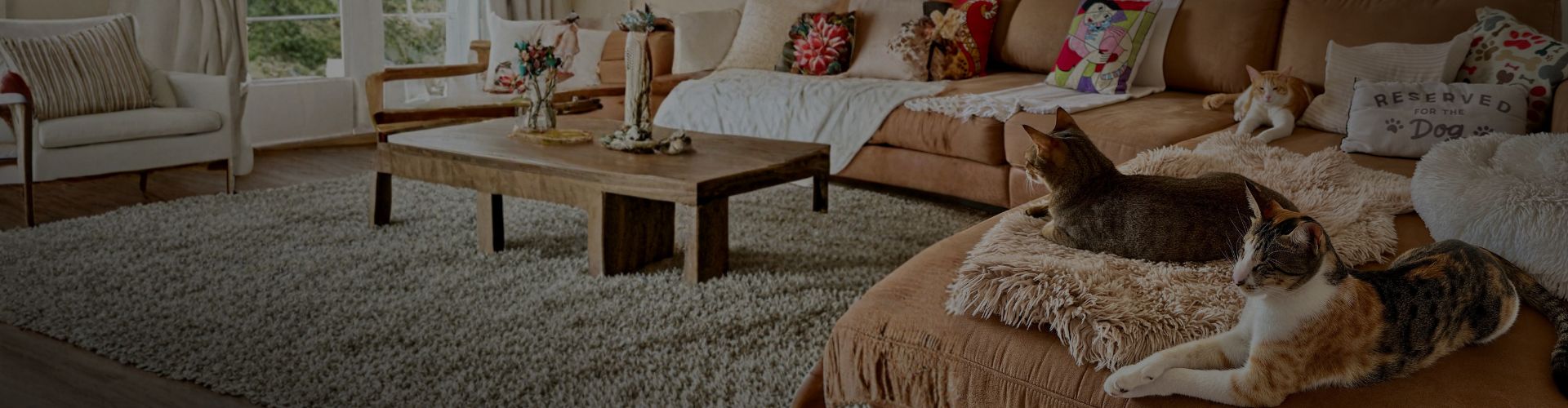
Harmony, Space & Personality Balance
Five cats in one home isn’t “a lot of cats”, it’s a social system. When the system is designed well, you’ll see parallel naps, playful bursts, and smooth mealtimes. When it isn’t, you’ll see hallway standoffs, litter confusions, and a chorus at 3 a.m. This guide shows you how to build and maintain harmony through thoughtful introductions, resource math, zoning, and personality balance. It’s written for real homes (apartments and houses) and assumes you want long-term calm, not short-term suppression.
1. The Foundation: Cats are Territorial and Social(On Their Terms)
Cats don’t live in “packs,” but they do form social groups around resources and safe routines. Harmony is not about forcing friendship; it’s about removing reasons to compete and giving each cat predictable control of their day. Think in four pillars:
- Safety — no one gets cornered; every area has at least two routes.
- Access — enough litter, food, water, and rest spots that no cat must negotiate.
- Structure — daily rhythm of play → eat → groom → sleep that drains arousal.
- Choice — vertical and horizontal options that let personalities coexist.
Hold those pillars in place and most “behavior problems” never materialize.
2. Resource Math for Five Cats (The Non-Negotiables)
Shortages create conflict. Use these baselines, then adjust up if you have tension or status-seeking personalities.
- Litter boxes: n + 1 → 6 total. Split across at least 3 zones. No lids, no perfume, and large open trays are usually recommended.
- Feeding stations: 3–5 stations, with at least one in a quiet room. Microchip feeders help if you have food thieves or special diets.
- Water: 4–6 stations, separate from food. One should be moving water (fountain).
- Scratchers: 6+ (a mix of vertical sisal posts and horizontal cardboard).
- Resting spots: 10–12 distinct sleep surfaces across heights (window perches, shelves, beds, chair tops).
- Hideaways: 3–4 covered dens (not all caves; some semi-covered).
- Gates/barriers: 2 baby gates or a playpen panel to create airlocks during introductions or deliveries.
This isn’t excess — it’s pressure relief. In a five-cat system, “maybe enough” is not enough.
3. Map the House like a Behaviourist: Routes, Rings, and Bottlenecks
Sketch your floorplan. Mark choke points (hallways, doorways), ring routes (paths that loop without dead ends), and vertical exits (shelves, the back of a sofa). Your goal is simple: no single path to anything important. If a box, bowl, or bed can be guarded from one spot, it will be.
Quick fixes that change everything
- Add a narrow console table behind the sofa so a cat can pass unseen.
- Use a slim bookcase as a visual break between a box and a doorway.
- Mount two low shelves by a hall so cats can “pass left” and “pass right.”
- Create an entry airlock with a baby gate to stop door dashes during deliveries.
Design breaks up pressure before it turns into posture, then into conflict.
4. The Evidence-Based Introduction Plan (21-28 days)
Even if your five are already together, this protocol doubles as a re-introduction plan after fights or vet visits. Go slower than you want; speed costs you later.
Phase 0 — health & scent baseline (Day −7 to 0)
- Vet checks for newcomers and residents: pain, dental issues, parasites. Pain masquerades as “attitude.”
- Trim nails, wash soft furnishings in unscented detergent.
- Place a pheromone diffuser near shared corridors (optional, useful for tense groups).
Phase 1 — scent only (Days 1–5)
- House-split: newcomer in a calm starter room (bedroom/office) with full resources.
- Twice daily scent swaps: exchange blankets and cheek-rub cloths between spaces.
- Feed high-value snacks on opposite sides of the closed door (association building).
Phase 2 — visual at a distance (Days 6–9)
- Replace door time with a crack/mesh (door stop, baby gate + sheet).
- Very short sight sessions (2–5 minutes) → then end while neutral.
- End each session with play or a treat away from the door. If either cat fixates, increase distance and shorten.
Phase 3 — parallel experiences (Days 10–15)
- Parallel play/feeding: wand play in each zone at the same time, then a small meal, then grooming/brush for cats who like it.
- Swap territory for one hour daily (site-swap) so the newcomer learns house scent and residents learn newcomer scent without contact.
Phase 4 — controlled proximity (Days 16–21)
- Remove sheet from gate. Allow 3–5 minutes of co-presence with a barrier and two exits.
- Reward look-and-away, slow blinks, and neutral sniffing. Interrupt hard stares with a light toss of a treat away from the barrier (redirect the brain, not the body).
Phase 5 — graduated access (Days 22–28)
- Supervised short co-time in a neutral room with two high exits and one low hide.
- Keep it boring: no wand toys in the first sessions; the arousal curve should stay flat.
- Increase by 3–5 minutes per session, then end while it’s still calm.
- If you see tail flagging + slow stalk or blocking: reset to Phase 3 for 48 hours.
Success looks like yawns, slow blinks, parallel resting, and indifference. Indifference is gold.

Safe, calm introductions using a barrier

Relaxing together after successful introductions
5. Daily Rhythm that Prevents 90% of Drama
Cats regulate through a predictable cycle. In multi-cat homes you lead the tempo.
AM
- Short wand play per subgroup (2–5 minutes each).
- Feed in stations; pick up bowls after 20 minutes.
- Litter scoop + quick corridor reset (treats scatter to break path guarding).
Midday
- Quiet foraging: scatter a small portion on a sniff trail; rotate which subgroup gets it.
PM
- Longer wand play (6–10 minutes each subgroup).
- Meals, then brushes/petting for those who enjoy it.
- Lights dimmed; soft white noise near known hotspots.
Sequence matters: play → food → groom → sleep. Dumping free food into a tense system gives you calories on top of conflict.
6. Litter Science (Harmony is Won or Lost here)
- Place boxes where a cat can see approach and has an exit. No boxes in dead ends.
- Extra-large trays (under-bed storage boxes are excellent).
- Unscented, fine clumping litter; 6–7 cm depth; scoop twice daily.
- At least one box on each floor. If ambushing occurs: shift box 1–2 m, add a visual break, and create a second path.
If a resident stops using the box during introductions, it’s a design message, not “spite.”
7. Food, Water, and the Politics of Access
- Feed on mats that define territory edges.
- Separate sightlines for anxious pairs; parallel bowls for bonded pairs.
- Microchip feeders for special diets or slow eaters.
- Water far from food; one moving source to invite hydration without resource guarding.
If stealing persists, elevate one feeder on a shelf where for example an older cat won’t jump to.
8. Vertical Space: Pressure Off, Peace On
Vertical options reduce confrontation by giving shy cats a predictable “third dimension” to opt out. For five cats, install at least:
- One window route per main room (hammock + shelf + shelf).
- A perch behind a visual screen (plant, bookcase edge) in the living space.
- A low ramp and cushioned step for elders; high-impact jumps irritate joints and trigger snark later.
Place vertical routes around resources, not directly above them, so perches aren’t used to guard bowls/boxes.

Joey & Rosie enjoying a window view

Marty watching Tony & Stevie explore the wall shelves

Tony using the wall-mounted cat tree
9. Conflict Evaluation: De-escalate Without Drama
Know the difference
- Tension: hard stares, tail-tip twitch, path blocking.
- Hot conflict: low growl escalating, piloerection, boxing, chase.
What to do
- Interrupt the picture, not the cat. Toss 3–4 high-value treats behind each cat so they break eye contact and move apart.
- Change the scene. Close a door or place a panel to create an instant visual break.
- Reset nervous systems. Short wand play with each subgroup separately; then a snack; then lights down.
- Audit design. Where did it start? Add a route, shift a box, break a sightline.
Punishment (yelling, squirting water) raises arousal and erodes trust; it doesn’t teach alternatives.
10. Re-introductions after a Fight or Vet Visit
Scents change after stress or vet clinic stays. If one cat is treated like an “intruder” on return:
- Stage a 48-hour mini split: returning cat in a quiet room with food, litter, and bed.
- Cheek-rub cloth swaps, then barrier visuals twice daily.
- Parallel feeding at the door; rewards for look-and-away.
- Short supervised access once neutral; end before excitement spikes.
Two calm days now save you two chaotic weeks later.
11. Special Cases: Rescues, Intact Cats, Medical Overlays
- Former street cats may over-patrol and resource-guard initially. Answer with excess abundance (double stations) and scheduled play to drain edge.
- Intact cats (if any) will spike conflict; neuter/spay is a harmony tool as much as a health one.
- Medical pain (dental, arthritis, cystitis, hyperthyroidism) often presents as irritability. If temperament changes suddenly, see a vet before redesigning your house.
12. Apartment vs House: Tailored Blueprints
Apartment
- Emphasize vertical loops; every room gets a shelf route.
- Two litter clusters on opposite sides of the plan.
- Sound-softening fabrics (rugs, curtains) to lower arousal.
House
- Create zoned territories: living space (social), bedroom (private decompression), office/catio (sensory).
- Stairs are natural choke points — add a mid-stair shelf detour.
13. Guests, Deliveries, and Life at The Door
- Keep a folding gate as an instant foyer barrier.
- Pre-place treats in bowls deeper in the home; cue “Here” + toss before opening.
- For anxious cats, move them to the bedroom sanctuary 10 minutes before guests; release once voices fade.
Teach humans your house rules. Harmony is easier when visitors don’t undo your system.
Conclusion: Harmony is Design, Not Luck
A five-cat home works when the environment does the heavy lifting. You’re not refereeing personalities; you’re arranging space, time, and access so personalities can coexist without negotiations. Start with resource math and a map. Introduce (or re-introduce) with patient, bounded steps. Lead the daily rhythm so arousal peaks on your schedule, not in your hallways. And notice what your cats show you — the social map is in their paws.
Do this, and five cats won’t feel like five problems. They’ll look like what they are: five different ways of being a cat, living in a system you’ve built to let each of them be fully themselves — together.